Ferry Packing Checklist: What to Keep in Your Hand Luggage and Car
A practical tick-box guide to packing for a ferry crossing, covering documents, hand luggage and the...

Ferry or Eurotunnel? Comparing Cost, Time and Comfort on Cross-Channel Crossings
Book a crossing from Britain to France and you meet the same fork in the road: ferry or Eurotunnel. Both get your car and its contents to the other side of the Channel. They suit quite different trips, though, and the cheaper option is not always the one that gets you to your destination sooner.
Here's how they compare on price, door-to-door time, comfort, luggage and flexibility.
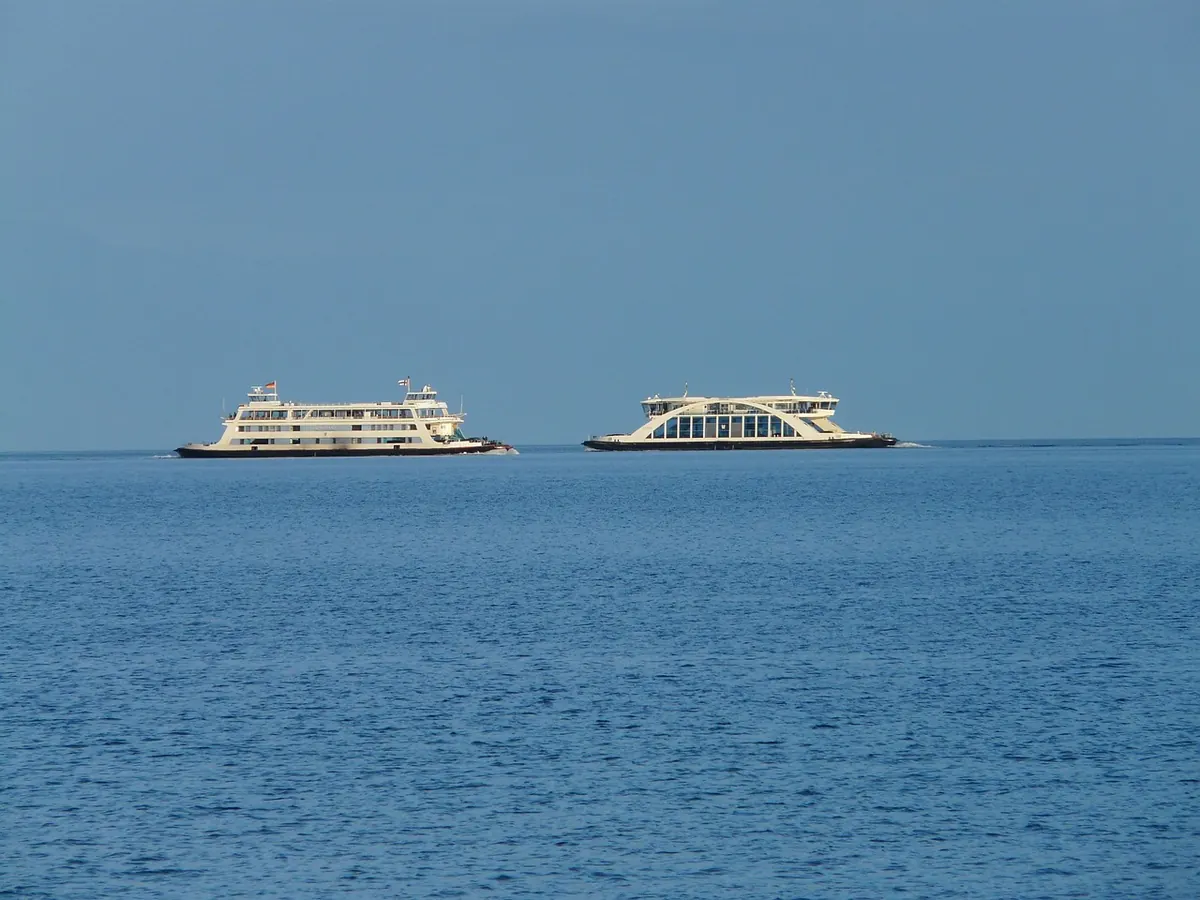
On a ferry you drive onto a ship, leave the car and spend the crossing in lounges, cafés or on deck. Short-sea routes across the Dover strait take roughly 90 minutes. Longer western routes from Portsmouth, Poole or Plymouth to Normandy and Brittany run for several hours, and some sail overnight with cabins. There are also crossings to Dieppe, Le Havre, Caen, Cherbourg, St Malo and Roscoff, which can put you much closer to western France than Calais does.
Eurotunnel's Le Shuttle runs between Folkestone and Coquelles, just outside Calais. You stay in your vehicle and the crossing takes about 35 minutes, with departures through the day and night. You drive on, wait in your car during the short crossing, then drive off. There are no sea views, no café and no cabin, but there is also no weather-dependent sailing.
Both options involve check-in, passport control and a period of waiting before boarding. The difference is how that waiting feels and where it leaves you at the other end. A ferry is a break in the journey; the tunnel is a pause in the drive.
Fares move constantly, so any comparison only holds for your dates. The pricing logic is fairly consistent, though: ferries often come out cheaper on the short straits, especially booked well ahead and at unsociable hours, while Le Shuttle charges largely per vehicle for a short, predictable crossing.
The ticket is rarely the whole cost. Worth adding up:
Compare like with like — same dates, same direction, same vehicle, both operators. Ten minutes on two booking screens beats any general rule.
It also helps to think in total trip cost. A cheap Dover–Calais ferry may look unbeatable until you add three hours of driving and a tank of fuel to reach the Loire. A pricier Portsmouth–Caen sailing can be the better buy if it drops you near your gîte. Conversely, a family of four in a packed estate car may find Le Shuttle surprisingly competitive because the fare does not climb with every passenger.
The advertised crossing time is the least useful figure. What matters is when you leave home and when you arrive.
For a ferry, add check-in time, boarding, the crossing itself, disembarkation and passport checks. Dover–Calais may advertise 90 minutes, but the full port-to-port experience can easily take two and a half to three hours. Western routes take longer at sea but may save hours on the road. An overnight sailing can also turn travel time into sleep time, which is a different kind of saving.
For Le Shuttle, add check-in, border control, boarding and the 35-minute crossing. Folkestone to Coquelles can be done in around an hour and a half from terminal to terminal when traffic is kind, though peak weekends and security queues can stretch that. The tunnel's advantage is predictability: short crossing, frequent departures and no concern about rough seas.
Geography decides more than speed. If you are heading to Paris, Disneyland, Belgium, the Netherlands or anywhere east of Calais, the short strait is hard to beat. If you are heading to Brittany, Normandy or the Atlantic coast, a western ferry can cut hundreds of miles from your drive. The fastest crossing is not the fastest route if it leaves you on the wrong side of France.
The right question is not "which crossing is fastest?" but "which crossing makes the whole day fastest?"
For a solo driver on a tight schedule, Le Shuttle usually wins. For a family heading to a farmhouse in Normandy, an overnight ferry with a cabin may win before the car has even left the driveway.
Ferries offer space to move. You can take a seat in a lounge, buy a coffee, eat a meal, let children run off energy or stand on deck as the white cliffs shrink. On longer routes, cabins turn the crossing into a proper rest. The trade-off is that you are sharing the space with hundreds of other passengers, and in peak season the best seats go quickly. Rough weather can also make the crossing uncomfortable for anyone prone to seasickness.
Le Shuttle keeps you in your own environment. You stay with your car, your snacks, your music and your children's entertainment. The crossing is short, and there is no sea motion. But you cannot leave your vehicle during the journey, so there is no walking around or hot food. For some passengers, especially those with back problems or restless children, 35 minutes in a parked car can feel longer than a 90-minute ferry with a lounge.
Comfort is therefore personal. If you want a break from driving, the ferry wins. If you want to stay in control and get moving again quickly, the tunnel wins.
Neither option imposes airline-style luggage limits on a normal car. You can pack as much as the vehicle legally holds, which is why both remain popular with families, cyclists, skiers and second-home owners. The practical differences lie in access and rules.
Check the specific route rather than the brand. A pet-friendly ferry on one route may have no equivalent on another, and a tunnel crossing that suits a dog may be less convenient for a caravan.
Ferries are more exposed to the weather. High winds and rough seas can delay or cancel sailings, especially on longer western routes. Le Shuttle is less affected by weather, but it can still suffer technical problems, security queues and knock-on delays. Neither option is immune to a busy bank holiday weekend.
Ticket flexibility matters here. A cheap ferry ticket may lock you into one sailing, while a flexible ticket lets you change. Le Shuttle offers turn-up-and-go flexibility on some fares, but the cheapest tickets are still tied to a time. If your plans might shift, price the flexible fares on both before deciding.
There is no universal winner. The ferry and Eurotunnel solve different problems. One gives you a break, a cabin and access to western France; the other gives you speed, frequency and simplicity. Match the crossing to the trip, do the full sums, and the right choice usually becomes obvious.
Photo: Hans / Pixabay
A practical tick-box guide to packing for a ferry crossing, covering documents, hand luggage and the...
A stage-by-stage walkthrough of a first ferry crossing, from booking checks and port check-in to boarding,...
Dover, Newhaven and Portsmouth all cross the Channel, but drive times, operators, crossing lengths and...