Ferry Packing Checklist: What to Keep in Your Hand Luggage and Car
A practical tick-box guide to packing for a ferry crossing, covering documents, hand luggage and the...

Portsmouth sends ferries to the Isle of Wight, the Channel Islands, France and Spain, which means it also sends thousands of people a day in search of the right terminal. The city does not have one port; it has several departure points scattered across different neighbourhoods. Working out which one you need, and how you will get there, turns a tense morning into an ordinary one.
The phrase “Portsmouth ferry port” covers four separate operations, and they are not within walking distance of each other.
Booking a taxi to “the ferry port” without naming which one is a common and expensive mistake. Check the terminal address on your booking confirmation, not just the word Portsmouth.
From the M27, leave at junction 12 and join the M275, which runs south into the city. Traffic from London arrives via the A3(M), joining the M27 at junction 5, and from the west via the M27 itself. Once you are on the M275, read the signs carefully: brown “Isle of Wight ferry” signs peel off towards Gunwharf Road, while “Continental Ferry Port” signs carry you on towards Mile End. Following the wrong set can cost you twenty minutes and a lap of the city centre.
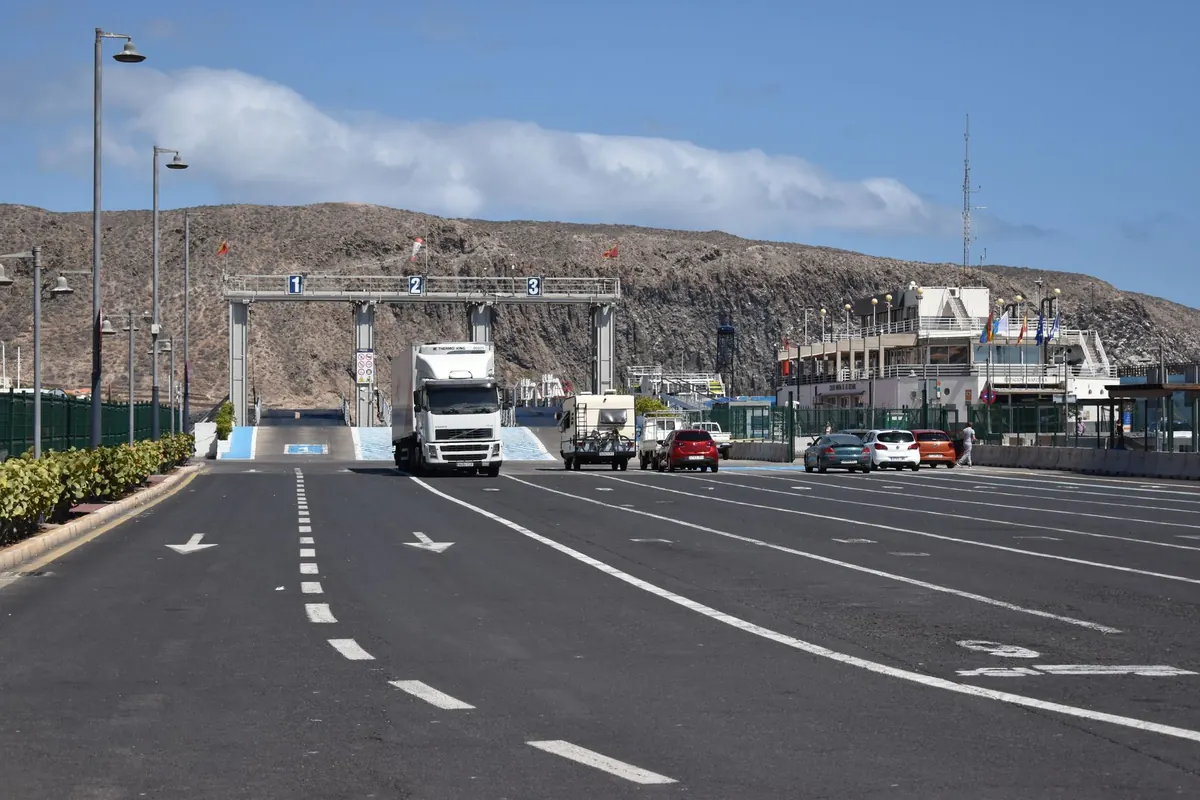
There are car parks at the port itself, with both short-stay and longer-stay options, and it is worth booking ahead rather than assuming a space will be free on a summer Saturday. Drop-off is quick and easy because the terminal building is right beside the vehicle check-in lanes, but do not leave a car unattended in the pick-up area; port staff move vehicles on. If you are sailing early, note that the approach roads are quiet at 5am and the car parks are not staffed at all hours.
Space at the Wightlink terminal on Gunwharf Road is limited, so most drivers use the multi-storey at Gunwharf Quays or the car park at Portsmouth Harbour station and walk over. Both fill quickly at weekends and during school holidays. If you are leaving a car for a week or more, confirm the maximum stay and the height restriction before you commit — multi-storeys are unforgiving about roof boxes.
Portsmouth International Port’s terminal is functional rather than glamorous. You will find check-in desks, seating, toilets including accessible facilities, a café, free Wi-Fi and luggage trolleys. It is not a shopping centre, so if you want a proper meal or a newspaper, buy it before you arrive. Passport and identity checks apply on international routes, so keep documents in a pocket rather than the bottom of a suitcase.
At Gunwharf Road and the Hard, things are simpler still: small buildings, short queues, no duty-free. The Hard has coffee shops and a convenience store within a couple of minutes’ walk, and Gunwharf Quays offers the widest choice of food if you have arrived with time to spare.
Portsmouth Harbour station sits directly above the FastCat terminal and the Hard, with direct trains from London Waterloo taking roughly an hour and a half via Havant. For the Isle of Wight foot passenger routes, you can step off a train and onto a catamaran without going outside.
For Brittany Ferries and Condor Ferries at Mile End, no station is close. Portsmouth & Southsea and Fratton are the practical options, followed by a taxi of about ten minutes or a local bus along Mile End Road. If you are travelling as a foot passenger on an international sailing, some operators sell coach connections from London and the Midlands — check what your booking includes before arranging your own transport.
Local buses run along Mile End Road past the international port and into the city centre, while the Hard is served by routes towards Southsea, Gunwharf Quays and the seafront. Taxi ranks operate at the Hard and at the port terminal, but early-morning ranks can be empty, so pre-book the night before rather than hoping.
Driving onwards, the M275 rejoins the M27 within minutes, putting Southampton, Winchester, the New Forest and the A3 to London within easy reach. One quirk to plan around: if you arrive from France or Spain and want to continue to the Isle of Wight the same day, the Wightlink and Hovertravel terminals are on the opposite side of the city, so allow a clear hour between arriving and checking in.
Charge your phone, screenshot your booking and parking confirmations in case signal fails, and check your operator’s website for the day’s sailing status before leaving home — weather and technical issues do occasionally shift departure times. Set off with a little slack and Portsmouth becomes a straightforward place to catch a ferry: a short run down the M275, a clear sign for the right terminal, and time for a coffee before you board.
A practical tick-box guide to packing for a ferry crossing, covering documents, hand luggage and the...
A stage-by-stage walkthrough of a first ferry crossing, from booking checks and port check-in to boarding,...
Dover, Newhaven and Portsmouth all cross the Channel, but drive times, operators, crossing lengths and...